
The Question That Never Seems to Go Away
If you spend enough time around fitness conversations whether in a gym, online, or even casually with friends and one question tends to surface again and again.
Should you be lifting heavy weights with lower reps, or lighter weights with higher reps?
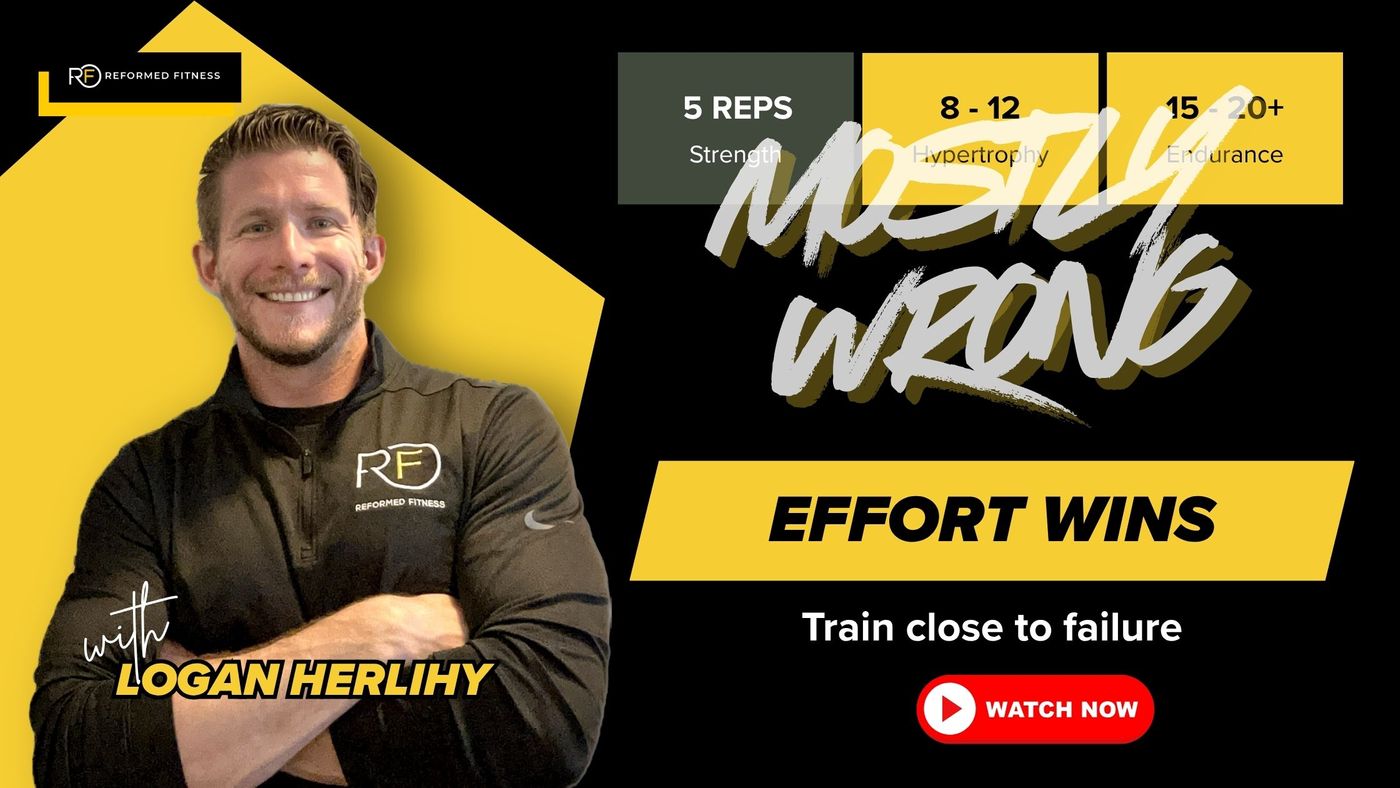
For years, the answer seemed straightforward. The traditional model, often referred to as the “repetition continuum,” suggested that different rep ranges produced entirely different outcomes. Low reps were said to build strength, moderate reps were best for muscle growth, and high reps were reserved for endurance. It was simple, easy to remember, and widely accepted.
The problem is that answer is outdated and simply false.
As research has advanced and more controlled studies have been conducted, this model has begun to break down. What initially appeared to be clear boundaries between training outcomes has proven to be far more fluid than previously thought.
For many people especially professionals trying to maximize results in limited time this shift in understanding rep ranges is not just interesting. It is incredibly useful.
Why the Repetition Continuum Falls Short
The traditional repetition continuum is not entirely wrong, but it is incomplete.
It correctly identifies that lifting heavier loads tends to improve maximal strength more effectively, largely due to neural adaptations such as increased muscle motor unit synchronization, firing frequency, and coordination. These changes allow the body to express force more efficiently, which is why someone who trains with heavier loads often becomes better at lifting heavy weights.
However, when the goal shifts from strength expression to muscle growth, the distinctions begin to blur.
A growing body of literature, including randomized controlled trials and meta-analyses led by researchers like Brad Schoenfeld, has consistently shown that hypertrophy can occur across a wide spectrum of loading schemes, provided that sets are taken close to muscular failure. Whether participants trained with loads as low as 30% of their one-repetition maximum or as high as 80%, muscle growth outcomes were remarkably similar when effort was matched.
This forces a reconsideration of the original model.
If low-load and high-load training both lead to similar hypertrophy, then the mechanism driving growth must exist outside of rep ranges themselves.
What Muscles Actually Respond To
At the physiological level, muscle growth is driven by three primary factors: mechanical tension, metabolic stress, and muscle fiber recruitment. While these concepts are often discussed independently, they are deeply interconnected.
Mechanical tension refers to the force experienced by muscle fibers during contraction. This tension is the primary driver of hypertrophy, as it initiates intracellular signaling pathways that regulate protein synthesis and muscle growth.
The key detail that is often overlooked is how that tension is distributed across muscle fibers.
Muscle fibers are recruited according to what is known as the size principle, you may have heard our exercise physiologists explain this in your workouts if you're a Reformed Fitness client. When muscle activates smaller, lower-threshold motor units are recruited first, and as the demand for force increases, larger, higher-threshold motor units are progressively activated.
When you lift a heavy weight, this recruitment happens almost immediately.
When you lift a lighter weight, the process unfolds more gradually. Initially, only lower-threshold fibers are engaged. However, as fatigue accumulates and those fibers can no longer sustain the required force, the body is forced to recruit higher-threshold motor units to continue the movement.
By the time you approach muscular failure, nearly all available muscle fibers are contributing, regardless of the load used.
This is why effort matters more than rep range.
Because reaching a high level of fatigue ensures that the fibers most responsible for growth those high-threshold motor units are ultimately recruited and stimulated.
The Role of Metabolic Stress and Fatigue
While mechanical tension is the primary driver of hypertrophy, metabolic stress plays a supporting role that becomes more prominent at higher repetition ranges.
As repetitions accumulate, metabolites such as lactate begin to build within the muscle. This creates the familiar “burning” sensation associated with high-repetition sets. More importantly, it contributes to cellular swelling, increased hormonal signaling, and a local environment that may enhance anabolic processes.
However, metabolic stress alone is not sufficient for muscle growth.
Its value lies in how it contributes to fatigue, which in turn forces greater motor unit recruitment. In other words, the burn is not the goal it is simply one of the mechanisms that helps you reach the level of effort required for adaptation.
This is also where many individuals unintentionally fall short.
At higher repetition ranges, discomfort often becomes the limiting factor before true muscular fatigue is reached. The sensation is intense, but the stimulus may still be incomplete if the set is terminated too early.
Why Strength Still Improves Differently
While hypertrophy can be achieved across a wide range of rep schemes, it is still important to recognize that strength is partially skill-specific.
Lifting heavier weights improves your ability to produce force under those specific conditions. This includes neural adaptations such as improved intermuscular coordination and reduced inhibitory signaling, which are more pronounced when training with high loads.
For busy professionals, this distinction matters less than it might for competitive athletes.
The primary goal is not to maximize one-repetition strength, but to build and maintain muscle, improve metabolic health, and preserve long-term function. From that perspective, a variety of weight and rep ranges can be equally effective.
What This Means for Your Workouts
When you take all of this into account, the practical takeaway becomes much simpler than the science behind it.
Muscle growth is not dictated by a certain rep range.
It is dictated by whether your muscles are challenged to a level that requires adaptation.
This gives you flexibility in how you approach your workouts. You can train with heavier loads and lower repetitions, moderate loads and moderate repetitions, or lighter loads and higher repetitions, as long as the sets are performed with sufficient effort.
For many individuals, a moderate range may feel the most intuitive, as it balances load, control, and fatigue. However, there is value in exploring different ranges over time, both to maintain engagement and to expose the body to slightly different challenges.
Building a Simple and Effective Approach
When complexity is removed, an effective strength training program becomes remarkably straightforward.
A full-body routine built around compound movements such as squats, deadlifts, lunges, pushing movements, and pulling movements provide a comprehensive stimulus in a time-efficient manner. Each exercise should be performed with controlled tempo and proper technique, using a load that allows you to approach complete muscular fatigue within a manageable number of repetitions.
Rather than focusing on hitting a specific number, the goal should be to end each set knowing that you could not have performed many more repetitions without compromising form.
Over time, progression can be achieved by increasing load, improving execution, or extending the number of repetitions performed at a given weight. These small improvements compound, creating meaningful changes in strength and muscle over weeks and months.
Ready to Build a Plan That Actually Works?
We get it, you don't have a lot of time to spend on exercise, you have decision fatigue from all of the important choices you make at work and at home every day, and it's hard to sift through the noise and know what actually works. Schedule a 15 minute FREE Discovery Call with one of our Exercise Physiologists so we can create a FREE personalized action plan for you. If you don't think that plan will save you time, avoid decision fatigue, and cut through the noise we will give you ONE MONTH OF FREE 1 on 1 PERSONAL TRAINING SESSIONS.